Written by Nick Segar
Director Consumer Marketing at HealthCare.com
Compare ACA and Private Plans That Fit Your Needs
You will be taken to

to finish your submission.
Premium tax credits can help reduce what you pay for an Affordable Care Act (ACA) Obamacare health insurance plan, depending on your household size and income. The IRS offers you two options: Take the credit now or get it later.
At first impulse, the choice may seem obvious: Collect your premium tax credit immediately when you buy your plan on a state exchange or the federal marketplace to reduce your monthly premiums all year long. However, to collect immediately, you need to estimate your income for the year and the size of your household correctly. If you get either wrong, you may face financial consequences. If you end up earning more during the year than you imagined, you could have to return your overpayment at tax time next year. Or you could earn less than you thought, and thereby get less assistance than you deserve until you file your taxes next year.
Either of these scenarios can occur if your circumstances change during the year and you fail to report them immediately and accurately to your state exchange or the federal marketplace.
Estimating income can be difficult for certain people. For freelancers and other self-employed individuals especially, annual earnings can be a moving target. These individuals can find themselves in a quandary: Is it better to take the premium tax credit now to keep monthly premiums down, or risk a repayment requirement or perhaps qualify for a tax-cutting refund when you file next year.
Lindsey Buchholz, Principal Tax Research Analyst at H&R Block, says that those with unpredictable annual incomes should look at their last three years of income to help estimate their likely income during the current year. Then, consider how to weigh the income estimate against the premium tax credit options.“If there are concerns they’re going to earn more and have to repay, they don’t have to take the full credit being offered,” Buccholz said. “So it may be better to take less up front, and then end up being owed more based on your actual income when you file your tax return.”
Buccholz added: “Another option is to increase your estimated tax payments if you’re making more money during the quarter than you thought. You can increase your premium payments a little bit to cover what you might have to repay later.”
Jeff Smedsrud, HealthCare.com CEO, offered similar advice.
“It is best to estimate income as closely as possible,” Smedsrud said. “Use last year’s income as a base. Remember that subsidies are based on household income, not just personal taxable income. To overestimate or underestimate is an individual choice. Underestimating your income will increase the amount of your subsidy, and make buying health insurance more affordable, at least until the next tax season.”
What happens when you file
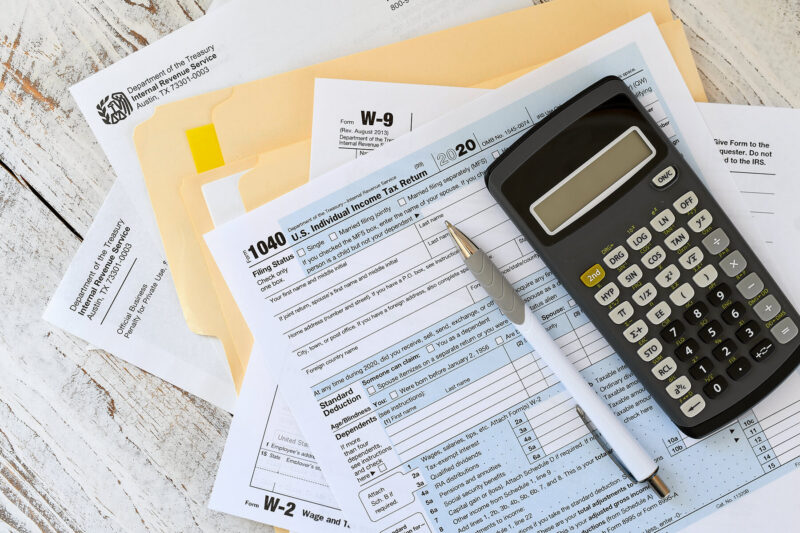
At tax season you will fill out Form 1095-A (Health Insurance Marketplace Statement), which details your health insurance enrollment for the year and whether or not you received a premium tax credit. This form will help you complete Form 8962 (Premium Tax Credit), which is used to reconcile the amount of financial assistance you received throughout the filing year with the amount you qualify for, based on your actual income. Here is where you learn you either received more premium tax credit than you are eligible for, or less. Again, too little earnings means you will get a refund, too much means you will have a balance due to the IRS.
Big change for 2026: Repayment used to be capped for most people, at amounts based on income and filing status. That is no longer true. Under the One Big Beautiful Bill Act, starting with 2026 coverage, there is no cap. If you took more advance credit than you qualify for, you repay the full difference when you file your 2026 taxes in 2027. And if your income ends up above 400% of the federal poverty level (about $63,840 for a single person or $109,280 for a family of three for 2027 coverage), you qualify for no credit and must repay all of it. Report income changes to the Marketplace as soon as they happen. See a full example in Do I Have to Pay Back My Premium Tax Credit?
Being faced with a repayment can sound daunting, especially if you do not have the funds owed at tax time. But Buchholz reminds consumers that they can set up payment plans with the IRS anytime they owe additional taxes.
When in doubt, report changes
If you opt for an immediate premium tax credit, you must diligently monitor significant income and family size changes throughout the year. The IRS requires that you report the following to your state exchange or federal marketplace:
- Material increase or decrease in income;
- Marriage or divorce;
- Birth or adoption of a child;
- Starting a job with health insurance;
- Gaining or losing your eligibility for other healthcare coverage;
- Changing your residence zip code.
If this sounds like too much work, then the advanced premium tax credit may not be for you. Or, as Buchholz suggests, you may elect to take a fraction of the premium tax credit you appear eligible for, or pay extra quarterly taxes if you see a bump in income. Ultimately, you must understand how premium tax credits work and decide which version makes the most sense to you.
Seek help from trusted resources
As you review health insurance for the upcoming year, look at your last few years of income and keep the nuances of taking too much or too little tax-credit assistance in mind. Your circumstances can be tricky. So if you have questions or concerns about health insurance and taxes, talk to a tax professional who has ACA training and is up to date with the law.
We want to help you make educated healthcare decisions. While this post may have links to lead generation forms, this won’t influence our writing. We adhere to strict editorial standards to provide the most accurate and unbiased information.


Prescription Savings Made Simple
Save at over 80,000 pharmacies nationwide with CareCard.
Get Started